
 KO
KO
 EN
EN
 JA
JA
 TW
TW
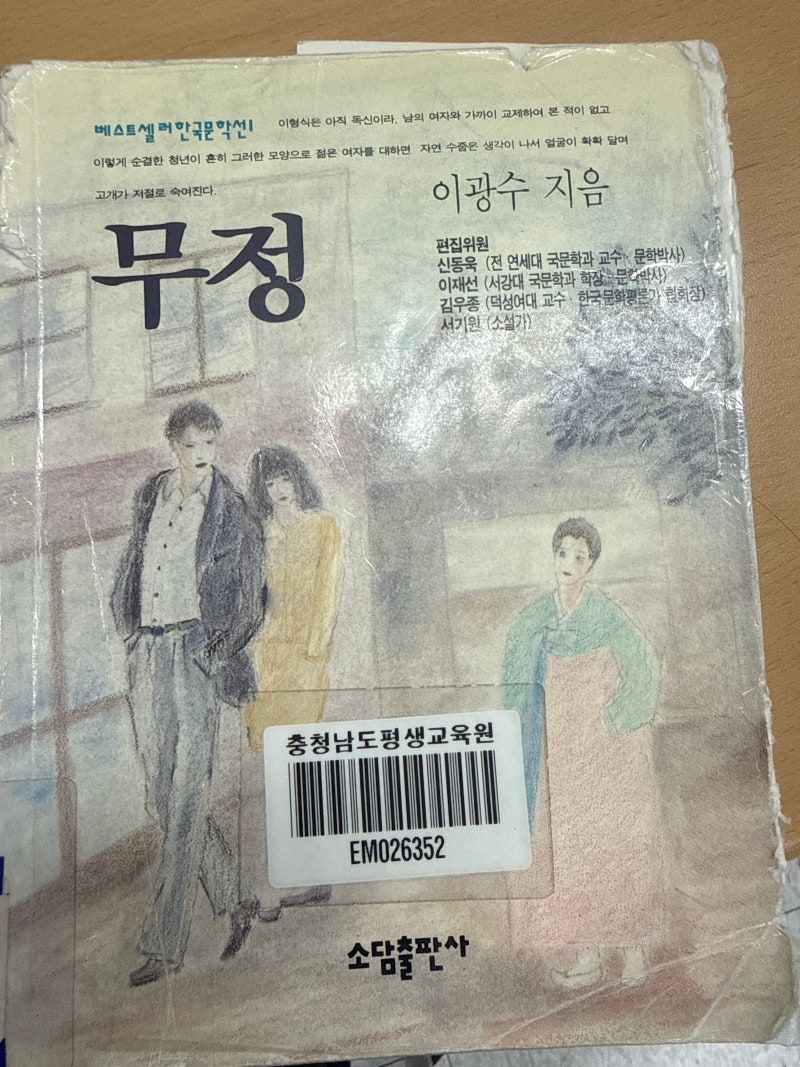
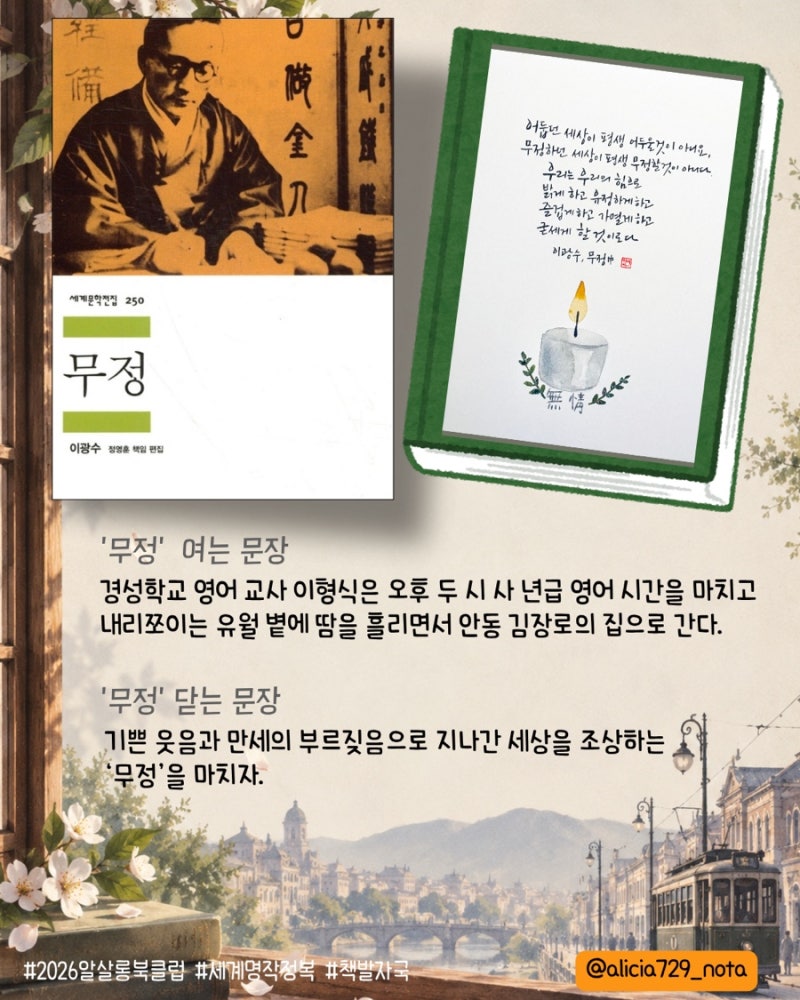
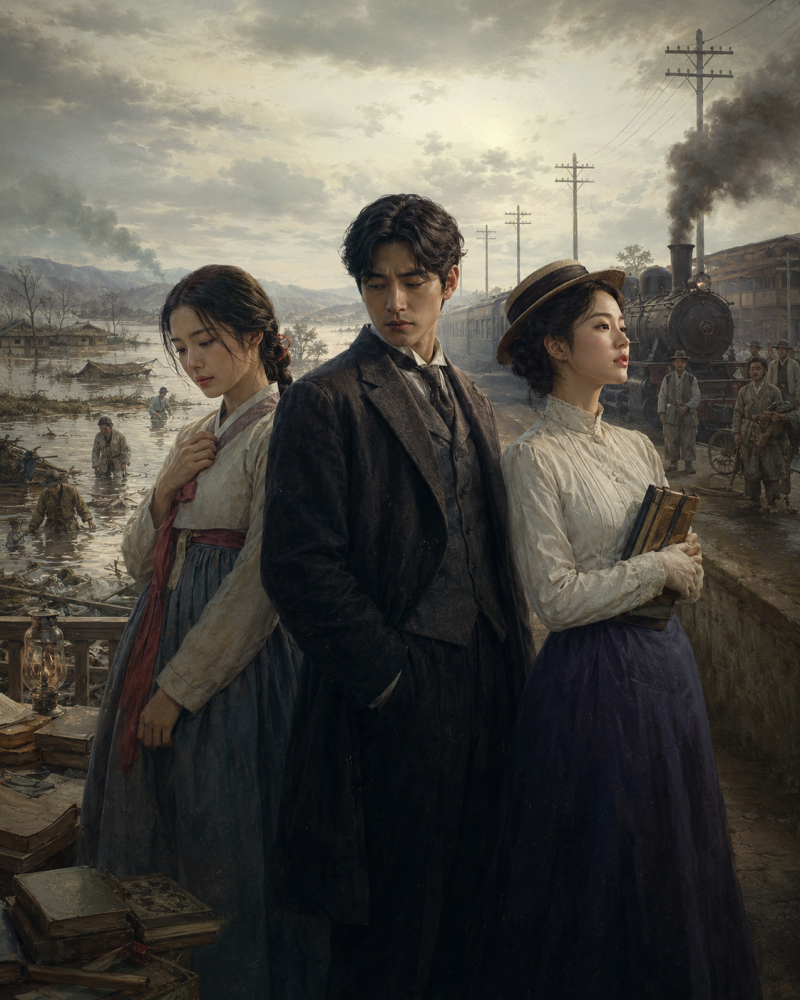

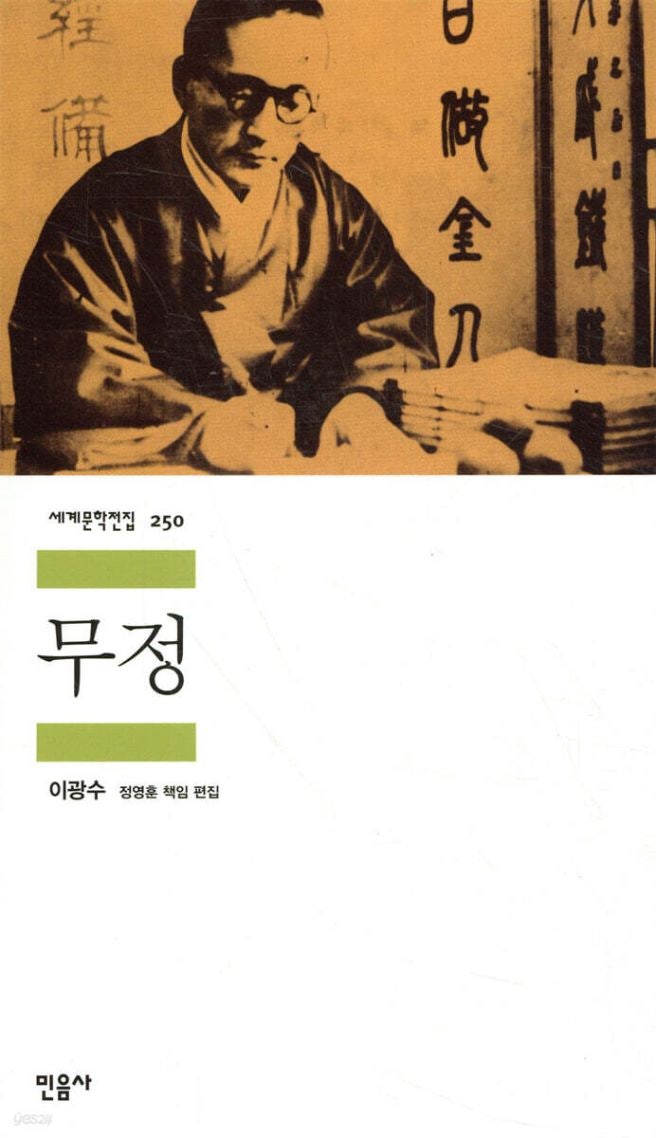
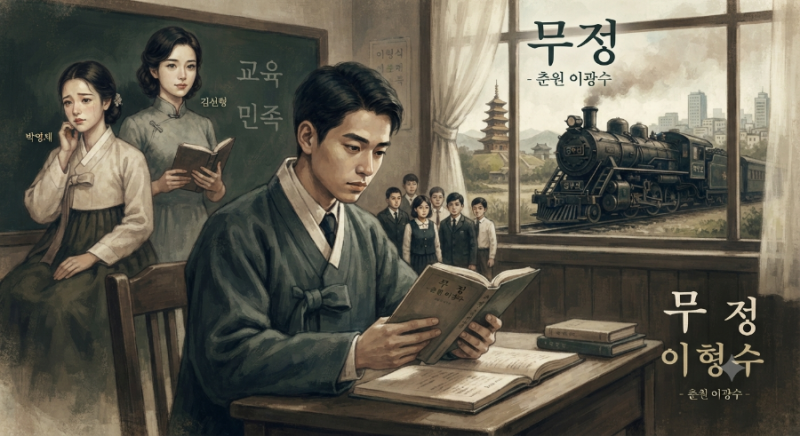
Lee Kwang-su's novel 'Mujeong' holds a significant place in Korean modern literary history, recognized as the first modern full-length Korean novel, serialized in Maeil Shinbo in 1917. The work centers on the love and conflict among three characters—Yi Hyeong-sik, Park Yeong-chae, and Kim Seon-hyeong—portraying the aspirations for modernization and enlightenment amidst the turbulent period when traditional and modern values clashed in Joseon society. It is considered the starting point of modern Korean novels, encompassing new ideas of the time such as free love, new education, women's perceptions, study abroad, and enlightenment.
The main plot of 'Mujeong' follows Yi Hyeong-sik, an English teacher at Gyeongseong School, who develops affection for Kim Seon-hyeong, the daughter of a wealthy elder Kim, while also encountering Park Yeong-chae, a childhood acquaintance, leading to internal conflict. Yi Hyeong-sik struggles between the traditional values represented by Yeong-chae and the modern new woman Seon-hyeong. Yeong-chae, despairing over her status as a gisaeng and the perceived loss of her purity, attempts to drown herself in the Daedong River. The novel concludes with a concert to aid flood victims, emphasizing messages of national development and enlightenment.
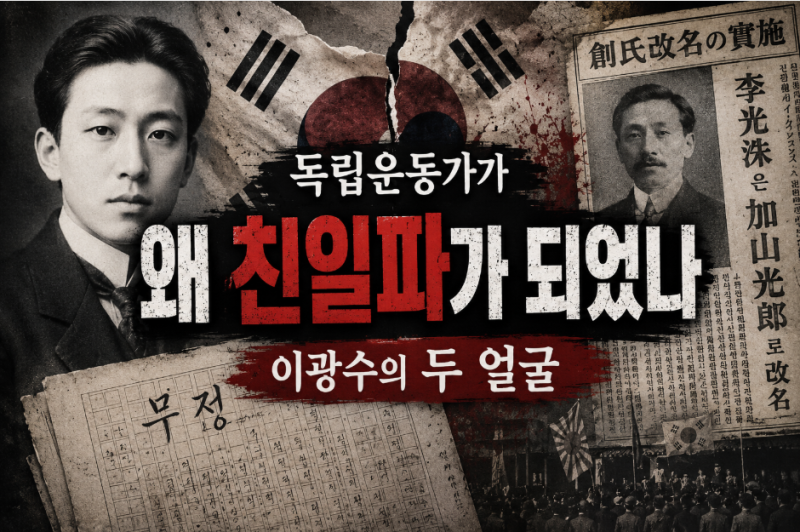
Bloggers note that 'Mujeong' offers a glimpse into the 'modern' ideals people aspired to during that era. They also emphasize that while author Lee Kwang-su played a crucial role as a pioneer of modern Korean literature, he is also a complex figure due to his active pro-Japanese activities in the latter half of the Japanese colonial period. Therefore, both the literary historical significance of the work and the historical criticism of the author must be considered together.
![[Reading Record] Mujong_Lee Gwang-su_Minumsa](https://mblogthumb-phinf.pstatic.net/MjAyNjA4MTJfMjEw/MDAxNzg2NTM1ODc3OTk5.EquYTlBIlzbMeQ0NKuk5neXQSu2iAYJtJrgUZ0TISywg.xzTvVC0A91FjBmMjW-hgKVxkbJQHm-8YAHwpmEmeK2Yg.JPEG/IMG%A3%DF5124.JPG?type=w800)
![[Book Review] Mujong - Lee Gwang-su](https://mblogthumb-phinf.pstatic.net/MjAyNjA5MTZfOTcg/MDAxNzg5NTM1MjQzNzA1.J-qCniqNppiJxopuDS9TpBHd9RKDRUXbeDwglHajTM4g.SCv8UElgaih1FIWSwPcxGKIEIopkuj9qpkSsmJNsnh4g.JPEG/20260916_140655.jpg?type=w800)